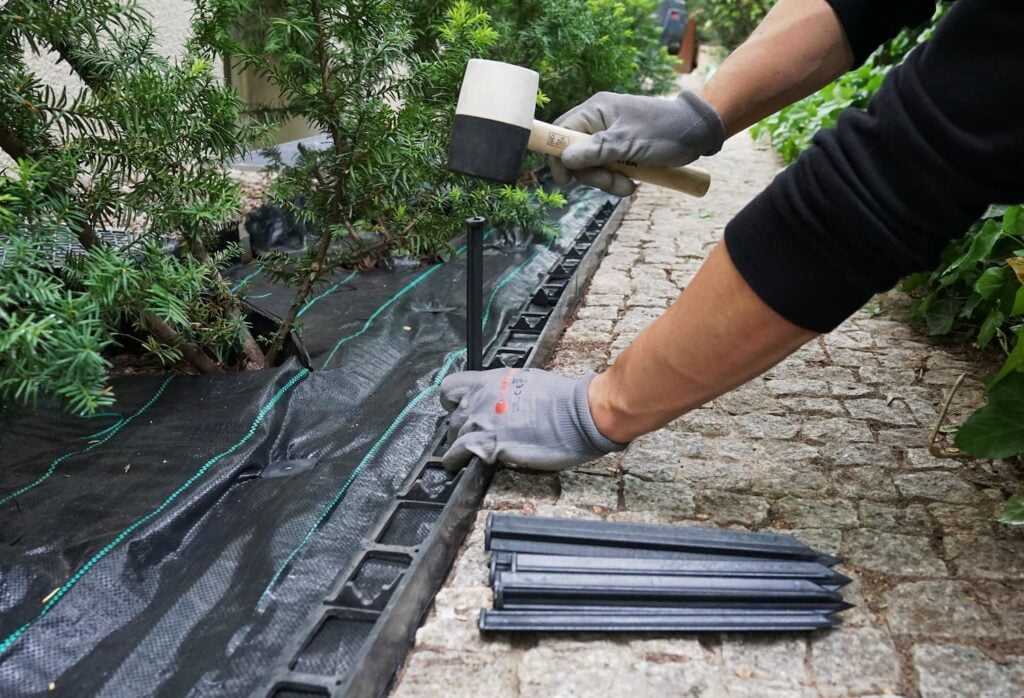
Spring in the garden is primarily a time for strategic planning for the upcoming season. It’s now time to make decisions that will influence the health of your plants and the cleanliness of your home’s surroundings. In an era of growing environmental awareness, it’s worth choosing solutions that save you time and protect the planet. By choosing proven, eco-friendly accessories, such as durable agrotextile fabric and flexible lawn edging, you’ll create a space that will delight your eye with a professional, well-maintained appearance throughout the season.
Prepare your garden for spring with Sammler organic products – find out how and what you will need!
Before grabbing rakes and shovels, it’s worth taking a moment to observe the area. Winter can change the soil structure, and winds bring in pollutants that can inhibit the growth of young shoots. When preparing your garden for spring, it’s worth starting with a thorough cleanup. Removing dead leaves, broken branches, and remnants of last year’s perennials is essential – lingering, damp organic matter is the perfect breeding ground for fungal pathogens, which are just waiting for the right moment to attack the awakening vegetation.
This year, it’s worth approaching the topic of modern landscaping with a sustainable approach. If you’re planning to create new paths or refresh the boundaries between your lawn and flowerbeds, consider garden architectural elements made from recycled materials. A perfect example is flexible lawn edging. By choosing models made of recycled 100%, you’re not only caring for the environment but also gaining a product of exceptional durability. These edgings allow for the free formation of curves and straight lines, which is invaluable when tidying up your garden after the chaos of winter. They will prevent grass from growing into flowerbeds, giving the entire area a professional, tidy appearance.
Once we have cleared the area and established the boundaries of our flowerbeds, it is worth considering long-term soil protection. Black or brown agrotextile This is a product that should be in every gardener’s stash this spring. Unlike thin mulch fabrics, these specialized mulch varieties are applied directly to the soil, under the plants. This is a brilliant solution for those who want to almost completely eliminate tedious weeding and reduce the use of herbicides.
Laid out on carefully cleaned soil, the agrotextile effectively blocks sunlight from reaching the substrate, preventing weeds from germinating. This is especially important when the garden begins to burst with life in spring and every plant competes for access to nutrients. Importantly, our agrotextiles are manufactured in 100% from recycled materials, making them a fully eco-friendly choice. Despite its dense structure, this material remains fully permeable to water and air. This allows rainwater to penetrate freely to the roots and allows the soil underneath to “breathe,” preventing rot.
Using such a barrier under ornamental shrubs, strawberries, or hedges also helps maintain constant humidity and a higher soil temperature, which stimulates plants to grow faster. For a better visual effect, the agrotextile can be covered with a layer of pine bark or decorative gravel.
Once the ground has thawed a bit, it’s time to feed your plants with nutrients. After heavy winter rainfall, the soil is often depleted of minerals. Many garden enthusiasts wonder what fertilizer to choose for their flowers in the spring to ensure a spectacular start.
It’s worth remembering micronutrients like magnesium, iron, and potassium, which strengthen plant immunity and intensify flower color. Instead of reaching for random products, slow-release fertilizers are a good choice. They release nutrients gradually, preventing rapid salinization of the soil. A well-nourished garden will reward you with a healthy appearance in spring that will continue to delight the eye until late autumn. Fertilization should be combined with gentle soil loosening, which will facilitate access to oxygen and water for the roots.
Once soil conditions are optimal, you can move on to the most enjoyable part of the season. Deciding what to plant in your garden in spring should largely depend on your plot’s sunlight exposure and soil type. This is the ideal time to plant deciduous and coniferous shrubs, as well as bare-root fruit trees.
This time of year is also the time to sow annuals, which will fill gaps in the flowerbeds after the bulbs have faded. When planting new plants, it’s a good idea to immediately lay a cut-to-size agrotextile around them. This will protect the young seedlings from weed growth and moisture loss from the very first days, significantly increasing their chances of quickly establishing themselves in their new location.
When selecting new plants, it’s a good idea to create groups with similar habitat requirements. This simplifies maintenance and ensures the overall composition looks cohesive.
By choosing modern accessories, such as lawn edging or agrotextiles made from recycled materials, we are taking a step towards a future in which a beautiful garden does not have to mean a burden on the environment.
Let’s remember that every step, from cleaning to conscious fertilization, builds a foundation for the entire upcoming season. Knowing how to prepare your garden for spring, combined with the right products, allows you to enjoy a space teeming with life for longer. Don’t be afraid to experiment with new plant varieties, but at the same time, stick to proven methods of protecting and structuring your garden. Let this time be a period of creative work and well-deserved relaxation amidst the awakening greenery. Every minute spent preparing now will pay off in the form of lush blooms and a bountiful harvest in the coming months.
ECOLOGICAL GARDEN SOLUTIONS
PREPARE YOUR GARDEN FOR SPRING COMPREHENSIVELY

Products 100%
recycled

Certified
quality

Individual
approach


 EN
EN  PL
PL  DE
DE  RO
RO  RU
RU  UK
UK