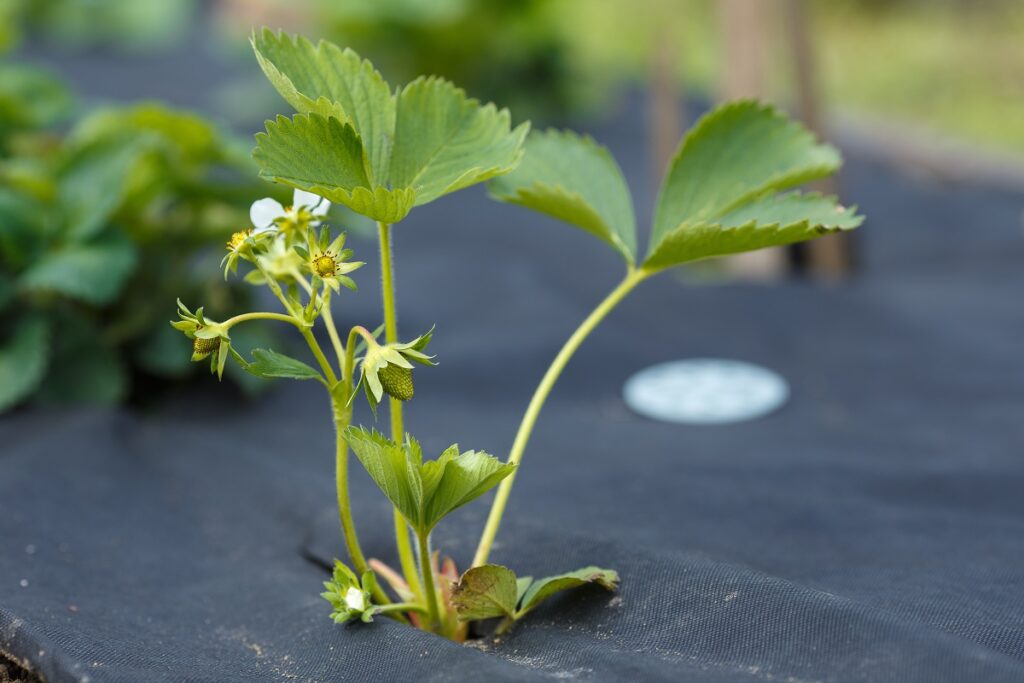
If you have your own garden and are worried that your plants will suffer from a lack of care during your vacation, the solution is to thoroughly mulch them with dark agrotextile. This method reduces water evaporation, blocks weeds, and protects the roots from overheating – ensuring your tomatoes or hydrangeas have optimal conditions for the two weeks you’re away. Want to know how to choose the right material to ensure everything survives the heat? In this post, we explain which material parameters to consider before packing your bags.
The answer is to physically block sunlight from reaching the bare soil while maintaining natural gas exchange. Beginning gardeners often wonder how to retain precious moisture in the heated soil without having to stand with a hose every day. A proven solution is to lay down a synthetic mat. A layer of this material, evenly distributed around the stems, acts as an insulating shield. Drying out the top layer of the soil leads to cracking of the soil and mechanical shedding of root hairs. These are the smallest parts of the roots that absorb life-giving water.
Correctly arranged agro-textile mulching fabric This allows morning dew and residual water from the last abundant watering to remain in the soil profile much longer. Instead of rapidly evaporating into the heated atmosphere, water condenses on the bottom layer of the material and slowly returns to the soil. This closed microcirculation saves vegetable crops and delicate ornamental shrubs when temperatures exceed 30 degrees Celsius in the shade.
During prolonged heatwaves, plants quickly enter a state of severe physiological stress. Defending themselves against water loss, they shed flowers en masse, their leaves turn yellow, and new shoot growth simply ceases. Careful protection of sun-heated soil from rapid drying can mitigate these destructive symptoms. Cover the soil. mulching mat maintains a constant temperature – it does not overheat during the hottest afternoons and does not cool down excessively during the colder August nights.
Many gardeners believe that spreading a thick layer of bark is enough. Unfortunately, the organic layer alone usually doesn’t cope with weeds, which grow at a dizzying rate in summer, stealing water from crops. Furthermore, strong winds and summer storms easily blow light wood chips across the lawn. Laying black mulch underneath agro-textiles solves this problem. The dark material blocks light from reaching seeds buried deep in the ground, so you can avoid the tedious task of weeding overgrown beds after returning from vacation.
No, as long as you choose a properly woven, porous material. A harmful myth persists online that synthetic mulching always leads to puddles and plant rot. Many vacationers wonder whether agrotextiles even let water through after a heavy July storm. Unlike regular construction or agricultural foil, high-quality nonwoven fabrics don’t block rainwater from seeping through. Rainwater penetrates through the micro-holes in the weaves, allowing the rain-fed soil beneath to breathe freely.
The complete permeability of the substrate is crucial for plant health after summer storms. Water blockage at the surface and lack of air exchange are a recipe for gray mold growth. Using a breathable substrate agro-fibre, you allow excess rainwater to soak deep into the soil, preventing rot right at the root collar. Even if heavy downpours pass over the garden while you’re away, the roots will remain safe and well-oxygenated.
The dark color and manufacturer promises alone are definitely not enough. When placing the fabric in an open space exposed to all-day sunlight, be sure to check the technical specifications on the packaging. A good fabric will reward you with high durability for many years. Below are specific features worth looking for in the store:
The absence of even one of these elements means the protective structure will quickly deteriorate. Buying cheap, untested substitutes without UV protection risks returning from vacation to find only crumbling scraps of plastic in your flowerbeds. Removing them from the ground will take many hours of hard work, which is precisely what we want to avoid.
Even the most expensive and thickest agrotextile won’t protect your vegetable garden from drought if the first gust of wind blows it away. The key to gardening success is firmly anchoring the edges to the ground. For this purpose, use special pegs or long, plastic anchors. Drive them in approximately every meter on flat sections and much more densely on uneven ground. It’s a good idea to gently tuck the edges of the mat under, creating a stiffer frame. This is a quick and easy solution that’s useful when traveling.
Your own patch of greenery doesn’t have to require you to work with a watering can, especially during the hot summer months. Carefully laying down a durable mulch a few days before your planned vacation will effectively protect your crops from drought. If you’re looking for reliable products that can withstand harsh weather conditions, check out our shop online. By choosing strong, Polish agrotextiles with a UV filter, you will protect your vegetable garden, valuable ornamental shrubs, and young trees, gaining valuable time for well-deserved relaxation.
PLAN YOUR VEGETABLE GARDEN FROM SCRATCH
REDUCE WEEDS AND TIDY UP YOUR FIELDS

Products 100%
recycled

Help in reducing
weeds

More convenient
planning the beds


 EN
EN  PL
PL  DE
DE  RO
RO  RU
RU  UK
UK