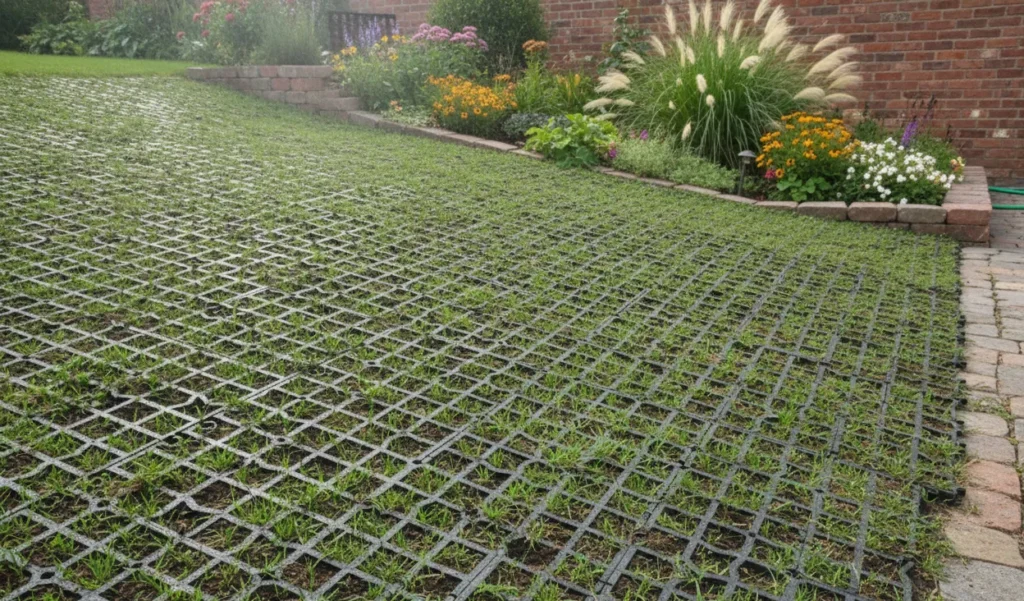
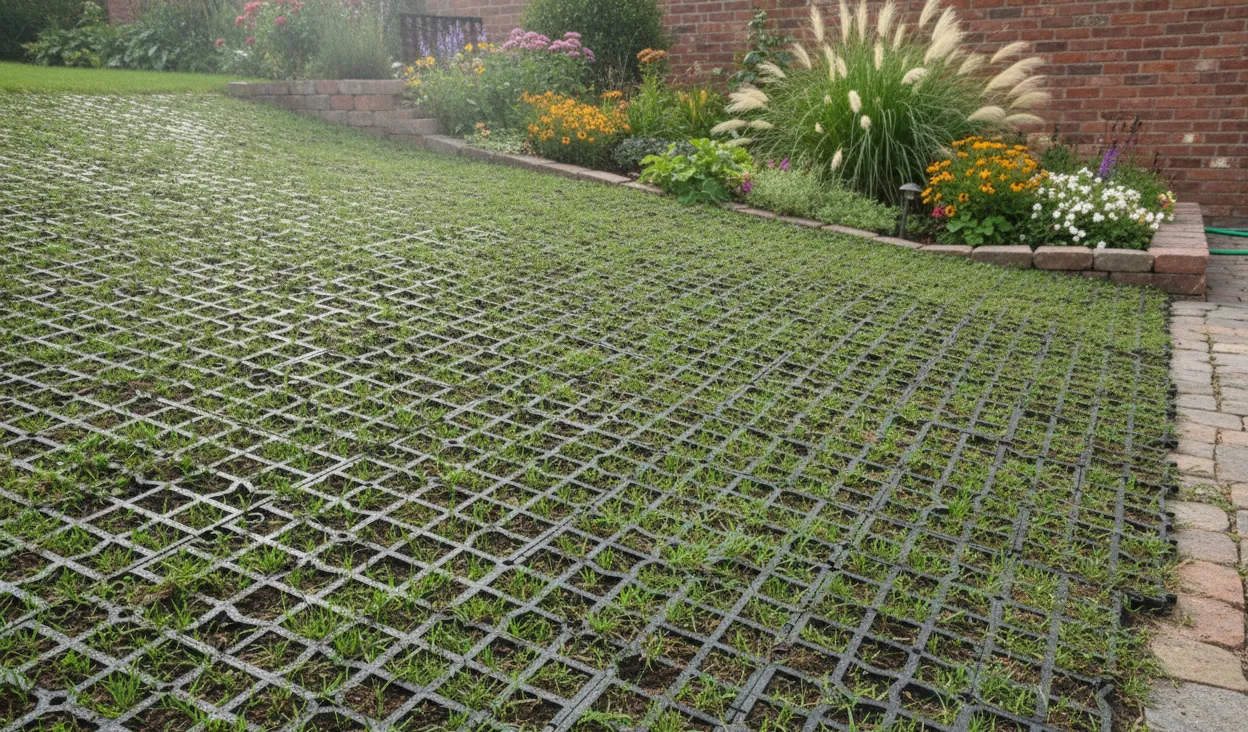
In the contemporary design of outdoor spaces, landscape architects are increasingly turning to solutions created with environmental concerns. Eco grid is perfectly in line with this trend, making it possible to harden the surface while preserving its natural ability to absorb water. While installation on flat ground is not too difficult, application on slopes, embankments or areas with an irregular profile requires thorough knowledge as well as careful execution.
In this blog post we will provide detailed guidance on laying of the eco grid in these more demanding conditions. You will learn how to ensure the durability and safety of the structure.
A definite yes! The eco-grating is one of the most efficient and economical solutions for reinforcing embankments, drainage ditches and slopes in gardens. However, before we move on to the installation itself, it is worth looking at the benefits of using this product in such conditions:
However, it is advisable to exercise caution on very steep slopes (in excess of 45–50 degrees), as the very eco grid may not be sufficient. In such situations, additional structures such as retaining walls or gabions should be considered.
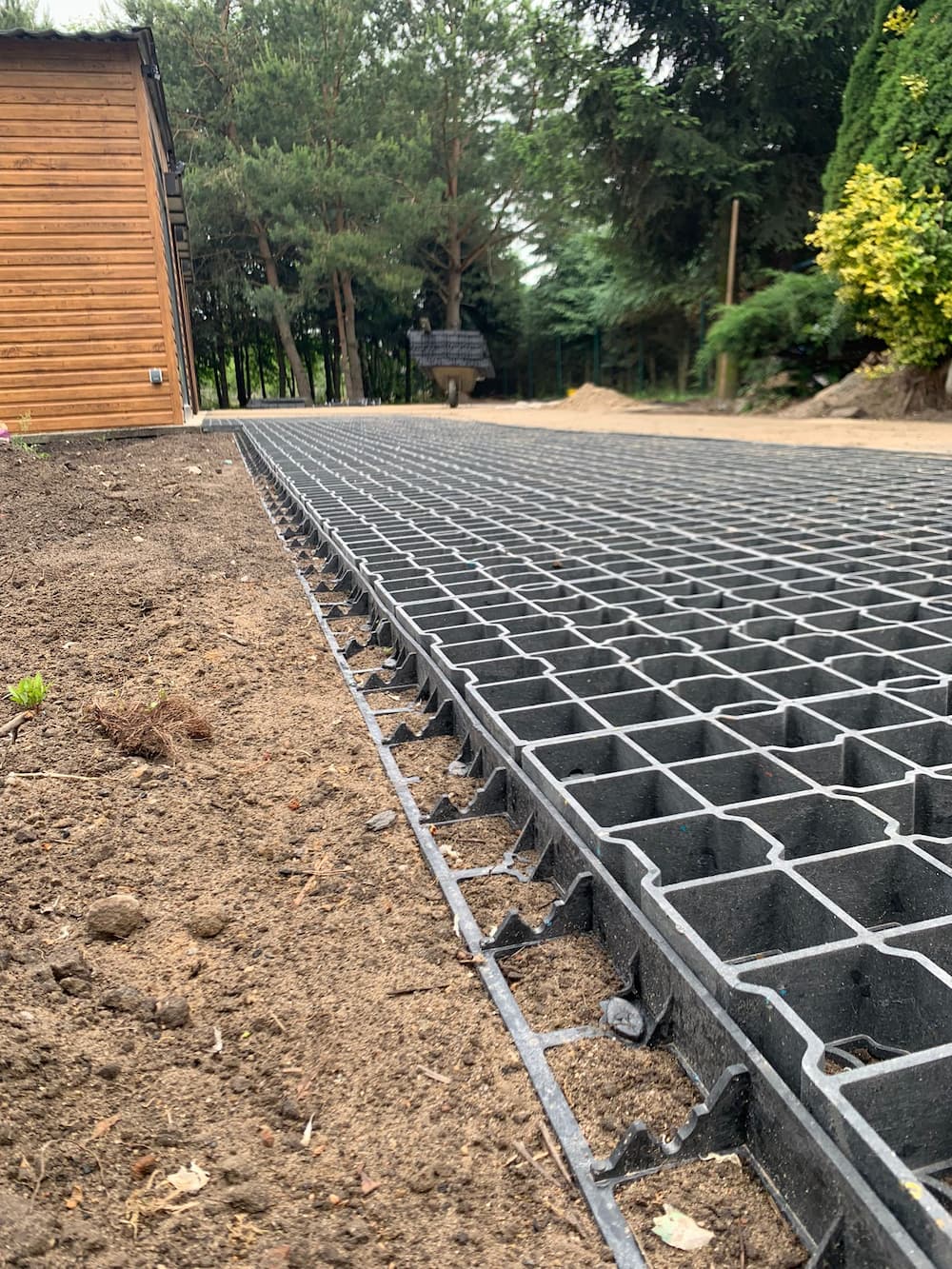
The correct installation of an eco-grating on sloping ground requires more precision than on flat surfaces. It is the way in which the substrate is prepared, the choice of the right layers and the stabilisation of the structure that determine the durability and reliability of the entire surface. In order to ensure that the whole process runs smoothly, and to ensure maximum durability, it is advisable to go through the steps of installation step by step:
Carefully measure the slope of the terrain before purchasing the materials. This value will determine the amount and type of stabilising elements required.
The substrate must be uniform and have adequate bearing capacity.
This is one of the key points that distinguishes slope installation from flat ground installation.
On slopes, gravity acts much more intensively, so the grid modules alone are not enough, they need to be solidly anchored.
It is recommended that the grates are laid from the base of the slope towards the top of the slope. This allows subsequent rows to rest on already installed and stabilised elements. When securing the banks, the lower edge of the entire structure should rest on a solid kerb or concrete retaining footing. This element will take the pressure of the entire pavement, preventing it from moving.
Eco-grating, although it has a certain flexibility, is not able to adapt to significant irregularities without risk of damage. Proper installation therefore requires attention to a few important principles to achieve a stable and durable pavement:
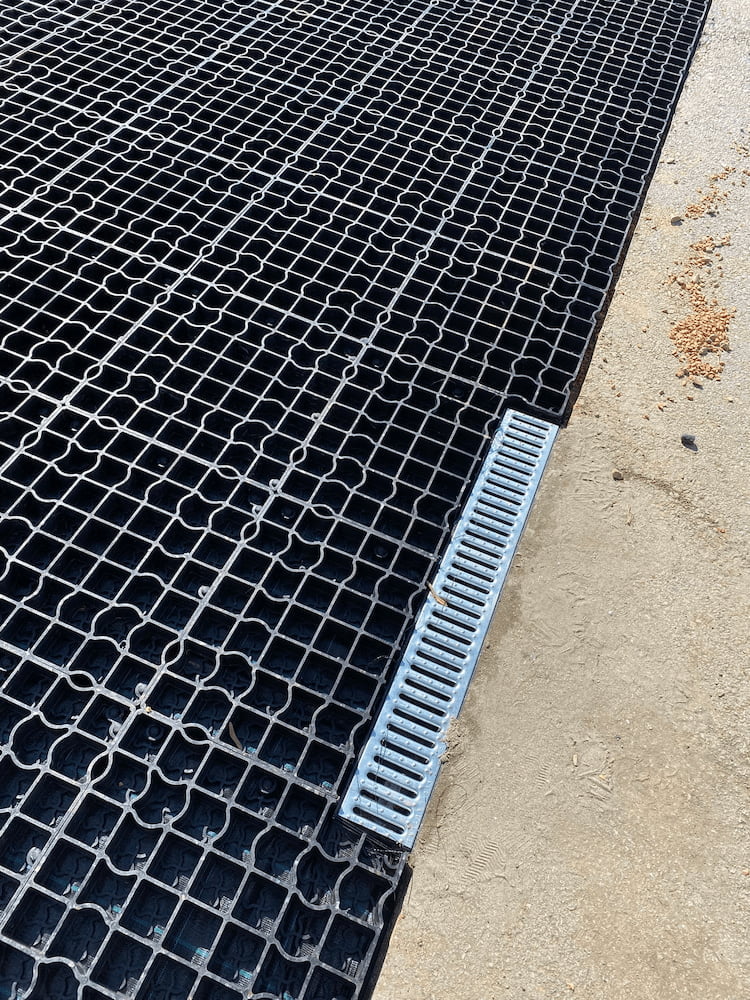
As a permeable surface, the eco-grating works superbly with drainage systems to promote efficient water management on the property. A well-executed installation ensures that the grating not only allows water to pass through, but also helps to direct it into the ground or into the drainage system.
It is important to remember, however, that a trellis alone will not cope with a waterlogged area if the native soil is poorly permeable — such as clay. In such a situation, the water will pass through the grating, but will be retained on the impermeable layer, creating puddles under the structure. Therefore, on difficult soils, it is necessary to use a drain to carry excess moisture away already from the substructure level.
The drainage pipes should be in the aggregate layer, under the geotextile and with a suitable filter lagging. In this way, the eco-grating acts as a wide „collector” that collects water from the surface and transfers it directly to the drainage system.
Installing an eco-grid on slopes, in gardens with drainage or on uneven ground is usually more expensive than a standard installation. This is due to the need for anchors, geotextile, additional sub-base or geogrids, as well as more labour. The price depends on the angle of the terrain, the type of soil and the extent of the necessary protection, so in such cases the cost is determined individually. This is the only way to reliably determine, how much does it cost to lay an eco grid under difficult conditions.
Investing in an eco-grid on slopes, uneven surfaces or gardens with drainage is a well-considered decision with many benefits. By keeping in mind the guidelines outlined for ground preparation, proper anchoring and adequate infill, you will create a durable and environmentally friendly pavement. While the initial cost may seem significant, the long-term savings associated with stormwater management, as well as the positive impact on the environment, make it a worthwhile venture.
We hope that this guide has cleared up any doubts and provided the necessary information for your project. If you have any further questions, please feel free to contact us!


 EN
EN  PL
PL  DE
DE  RO
RO  RU
RU  UK
UK