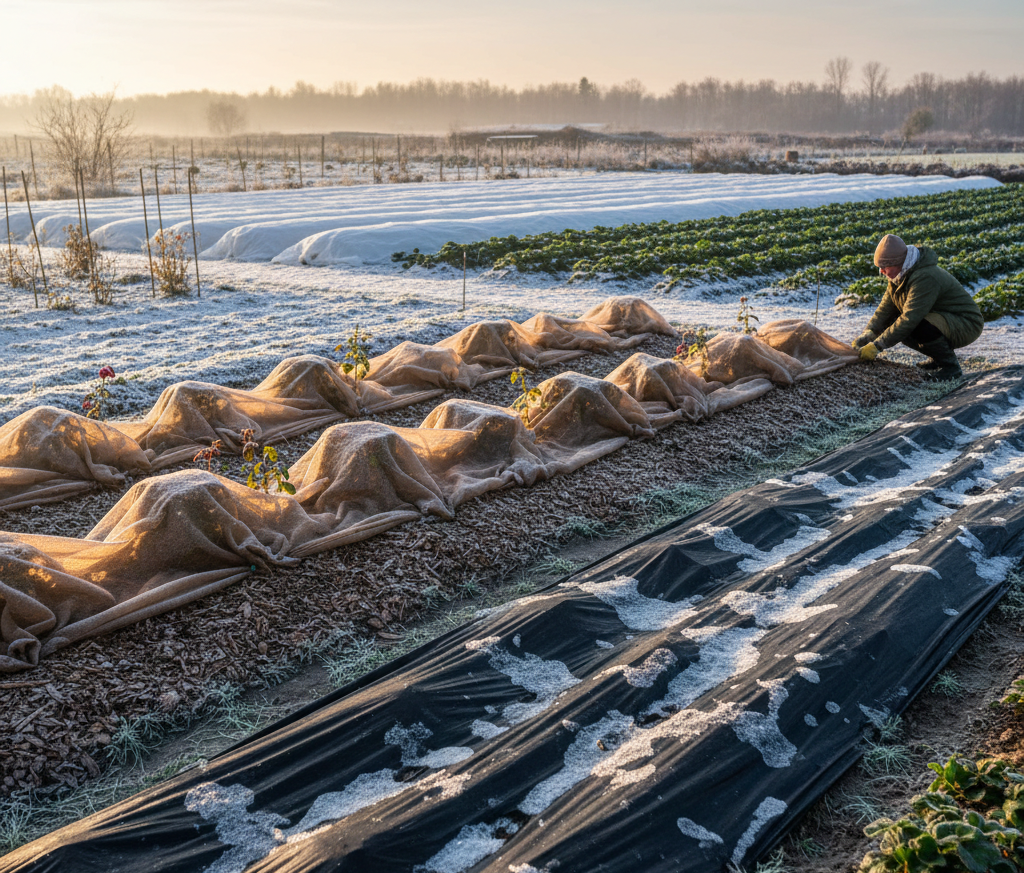
Winter can put a garden to the test – frost, wind, and temperature fluctuations have a real impact on the health of crops. Properly protecting your greenery not only helps reduce losses but also facilitates a spring start. In this article, we explain what to consider when choosing agrotextiles for covering plants for the winter season, what variants perform best in different conditions, and why weight and color matter. This practical knowledge will help you consciously care for your garden without unnecessary experiments.
Agro fleece for covering plants This lightweight synthetic material with a porous structure allows water and air to pass through freely, while also creating a thermal barrier. The material works by maintaining a constant temperature beneath the cover’s surface, preventing the cellular juices in the shoots from freezing rapidly.
The use of such protection also limits moisture evaporation from the soil, protecting the root system from physiological drought. This solution is widely used in various areas, such as:
Application agrotextiles for covering plants allows you to reduce losses after winter and ensures a better start to vegetation with the arrival of spring.
Assembly agrotextiles for covering plants It’s worth planning before the first frost arrives, when the soil temperature remains above freezing. Fall is when plants gradually enter dormancy, and proper cover allows them to safely survive the colder months. Early spring use can also be helpful, especially during sudden temperature drops, but winter installation provides the most complete protection.
The choice of color of the protective material depends on the nature of the crops and the garden arrangement. Agro fleece brown It is often used in decorative flowerbeds because it visually blends well with bark, soil, and ornamental plants without disrupting the overall appearance of the planting. It is a proven solution for shrubs, perennials, and in representative areas.
On the other hand black agro fleece for mulching It is more common in utility plantings and plantations where soil protection and thermal stabilization are important. Its color promotes the accumulation of solar energy, allowing it to gently warm the soil even in winter. Both variants meet different needs and should be tailored to the specific application.
The thickness of the chosen protective material directly affects the degree of thermal insulation and mechanical strength of the cover. Therefore, the choice of a specific variant should be dictated by the requirements of the specific species and the weather conditions occurring in a given region. Sammler We have prepared two suggestions that will work well for most crops.
Agro-textile Weighing 50 g/m², it provides lightweight cover recommended for plants less sensitive to frost and for home gardens. It protects against chilly winds and limits moisture evaporation from the soil, without weighing down delicate shoots.
The heavier variant, i.e. agro-fibre 80 g/m², designed for demanding sites and plants exposed to severe frost. It boasts greater resistance to damage and better thermal insulation, making it often used in professional cultivation.
Winter plant protection doesn’t have to mean compromising between effectiveness and environmental protection. At Sammler, we focus on eco-friendly garden products, which support natural processes occurring in the soil and also help reduce chemical interference. Our solutions are designed with long-term use in mind and the real needs of gardeners – both hobbyists and professionals. The right selection agrotextiles for covering plants makes greenery care in winter easier.
Choosing agrotextile for winter requires considering several factors: installation date, color, and weight. A properly selected material effectively protects plants from frost and wind while supporting natural soil conditions. Whether your flowerbeds are decorative or functional, informed decisions translate into better plant health next season. Check out Sammler’s offerings and choose yours. eco products matched To the needs of your garden, to provide plants with effective protection and a peaceful wintering.



 EN
EN  PL
PL  DE
DE  RO
RO  RU
RU  UK
UK